
Review Article
Strategic Foresight and Its Contribution to Improving Corporate Social Responsibility Practices: A Systematic Review
1 Escuela de Posgrado, Universidad San Ignacio de Loyola, Lima 15024, Peru; https://orcid.org/0009-0008-2710-1107
* Correspondence: jorge.velez@epg.usil.pe
Received: 2025-11-12 | Revised: 2025-12-16 | Accepted: 2025-12-19 | Published: 2025-12-20
Citation: Velez Martell, J. E. Strategic Foresight and Its Contribution to Improving Corporate Social Responsibility Practices: A Systematic Review. Ceniiac, e0007. https://doi.org/10.64923/ceniiac.e0007
Copyright: © 2025 by the authors. Licensee Negocios Globales, Maracaibo, Venezuela. This article is an Open Access article distributed under the terms and conditions of the Creative Commons Attribution (CC BY) license.
ISSN: 3105-6237 (online).


Abstract: This study presents a systematic review of the scientific literature published between 2020 and 2025 on the relationship between strategic foresight and corporate social responsibility. Structured methodological procedures were applied in accordance with the PRISMA 2020 guidelines, including the search and analysis of articles in international academic databases. Out of a total of 180 records identified, 32 studies met the inclusion and quality criteria and were incorporated into the final synthesis. The analysis was conducted through a qualitative thematic synthesis, which made it possible to identify conceptual approaches and practical applications. The results show that strategic foresight contributes to strengthening corporate social responsibility by enhancing anticipatory capacity, fostering innovation, and aligning decision-making with sustainability objectives. It is concluded that integrating strategic foresight into organizational management promotes a culture of responsible, resilient, and future-oriented planning, consolidating its role as a key pillar in the sustainable transformation of organizations.
Keywords: strategic foresight; corporate social responsibility; sustainability; systematic review; organizational management; Latin America
1. Introduction
In a global environment characterized by accelerating technological change and increasing market complexity, strategic foresight (SF) has become an essential tool for anticipation and sustainable decision-making. This approach enables organizations to analyze trends, build scenarios, and develop adaptive strategies that enhance their capacity to respond to uncertain contexts (Demneh et al., 2023; Fergnani, 2022; Marinković et al., 2022). Its application in the business domain has been shown to strengthen innovation and sustainability by promoting a long-term perspective and a more conscious management of organizational change (Carayannis et al., 2021; Linares-Barbero & De La Vega, 2024).
In parallel, Corporate Social Responsibility (CSR) has evolved from a philanthropic approach toward a comprehensive strategy that guides business actions toward social, environmental, and economic well-being. Organizations have recognized that corporate sustainability requires going beyond regulatory compliance by adopting responsible policies that balance growth with social equity and environmental protection (Barauskaite & Streimikiene, 2021; Lu et al., 2020). In this context, strategic foresight provides methodological support to anticipate the future effects of business decisions and to design strategies aligned with the Sustainable Development Goals (Fathi et al., 2021).
Despite advances in the literature, a knowledge gap remains regarding the practical integration of strategic foresight into CSR. Most recent studies have been conducted in Europe and Asia, while in Latin America—and particularly in the Peruvian context—its application remains incipient and weakly institutionalized (Moscoso-Paucarchuco, 2024). This theoretical and contextual limitation hinders a deeper understanding of how anticipation and future-oriented planning can strengthen social responsibility practices, environmental management, and organizational sustainability.
Against this backdrop, the purpose of this study is to identify the importance of strategic foresight and its contribution to improving CSR practices. To this end, a systematic review of recent scientific literature (2020–2025) was conducted, enabling the analysis of trends, approaches, and key findings on the relationship between these two concepts. This analysis seeks to integrate theoretical and empirical evidence that provides an updated perspective on the benefits, challenges, and opportunities of foresight as a support for sustainable management.
The methodology follows the guidelines proposed by Kitchenham (2004) and Petticrew and Roberts (2006), ensuring a structured process of searching, selecting, and synthesizing the reviewed studies. In this way, the article offers both theoretical and practical contributions that enhance understanding of the role of strategic foresight in responsible planning and sustainable value creation.
The paper is structured into four main sections: the theoretical framework, which develops the conceptual foundations of foresight and CSR; the methodology, which describes the systematic review approach; the results and discussion, which present the main findings; and the conclusions, which synthesize the theoretical and practical implications of the study.
2. Theoretical Framework
The present theoretical framework was developed based on a systematic review of recent scientific literature (2020–2025), focused on identifying the most relevant concepts, approaches, and findings related to strategic foresight (SF) and corporate social responsibility (CSR). Source selection was based on recency, theoretical relevance, and publication in high-impact indexed journals. The information was organized into two analytical dimensions—conceptual and applied—with the aim of synthesizing the theoretical and empirical contributions that support the relationship between both variables within the field of sustainable organizational management.
2.1. Concepts of PE
Many authors define PE as a discipline that enables organizations to anticipate future scenarios and design adaptive strategies. According to the studies by Demneh et al. (2023), Fergnani (2022), and Marinković et al. (2022), the key concepts of PE include several dimensions, which are detailed in Table 1.
Table 1. Key concepts included in PE
|
Concept |
Description |
Source |
|
Future vision |
Ability to foresee trends and changes in the business environment to make informed decisions |
Fergnani (2022) |
|
Uncertainty analysis |
Assessment of external factors that may affect an organization’s sustainability and competitiveness |
Marinković et al. (2022) |
|
Scenario building |
Development of possible futures based on data and current trends, enabling firms to prepare for different contexts |
Demneh et al. (2023) |
|
Dynamic capabilities |
Organizational adaptability to respond to unforeseen changes and seize emerging opportunities |
Mohammadi (2023) |
|
Strategic innovation |
Use of foresight to foster creativity and the development of sustainable solutions in business management |
Linares-Barbero and De La Vega (2024) |
The literature also points out that foresight is proposed as a promising approach for analyzing potentially disruptive changes. It is argued that, to gain an in-depth understanding of less evident future challenges, organizations must detect emerging trends, carefully examine their external context, and promote spaces for exchange among key actors who can contribute diverse perspectives (Wiener et al., 2020). PE is grounded in trend analysis, the identification of drivers of change, and the construction of future scenarios (Demneh et al., 2023; Fergnani, 2022; Marinković et al., 2022).
Its application to RSE allows firms to anticipate risks and opportunities, optimizing decision-making in key areas such as environmental management, social equity, and corporate governance (Fathi et al., 2021; Fergnani, 2022; Linares-Barbero & De La Vega, 2024). In practice, PE promotes the improvement of social responsibility actions by translating anticipation into innovation and preventive management.
Organizations that incorporate a future-oriented vision into their RSE policies can redesign their social and environmental programs before emerging problems escalate, transforming their practices into more sustainable, measurable processes aligned with stakeholder expectations. In this way, foresight ceases to be an exclusively analytical tool and becomes a driver of operational change within responsible management. Studies show that organizations integrating PE into their planning processes achieve greater resilience and adaptive capacity in the face of regulatory and market changes (Belk et al., 2023; Brandtner & Mates, 2021; Carayannis et al., 2021; Fathi et al., 2021).
These concepts are fundamental to RSE planning, as they enable firms to design sustainable strategies aligned with future challenges. From a theoretical perspective, the relationship between PE and business management can be understood through the dynamic capabilities approach proposed by Teece (2007). This framework argues that organizations that develop the ability to anticipate, integrate, and reconfigure resources in changing environments achieve greater adaptability and sustainability. In this sense, PE acts as an organizational learning mechanism that strengthens these capabilities, enabling more agile responses to emerging risks and closer alignment with sustainability and corporate responsibility objectives (Fergnani, 2022; Marinković et al., 2022; Linares-Barbero & De La Vega, 2024).
From an applied perspective, PE strengthens the organizational capabilities required for RSE to evolve from reactive management to proactive management. By anticipating future scenarios and modeling potential social and environmental impacts, firms can adjust their inclusion, equity, and sustainability policies, thereby improving the effectiveness and continuity of their RSE practices. This approach favors the institutionalization of social responsibility as a process of continuous improvement, aligned with a long-term sustainable development vision. Within this framework, PE acts not only as an anticipation tool but also as an essential component for understanding and strengthening RSE, a topic developed in the following section. Figure 1 presents the key concepts of PE.
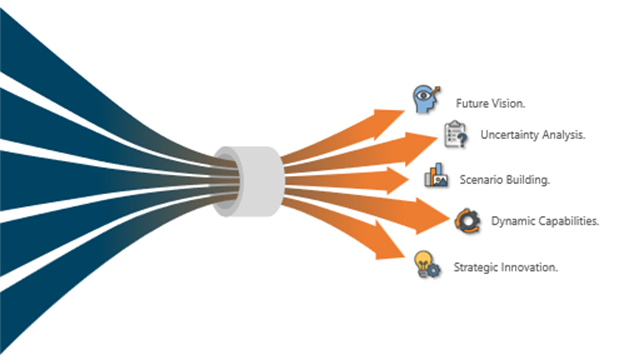
Figure 1. Key concepts of PE
2.2. Basic concepts of RSE
RSE has evolved from being a voluntary initiative to becoming an essential component of business strategy (Barauskaite & Streimikiene, 2021; Lu et al., 2020). Organizations can no longer limit themselves to minimal regulatory compliance; they must adopt a proactive approach that ensures the sustainability of their operations and the well-being of their stakeholders (Fathi et al., 2021). In this regard, PE offers tools to assess how current decisions will affect the future, enabling firms to design more effective RSE policies aligned with the Sustainable Development Goals (ODS) (Fathi et al., 2021).
RSE can be defined as the voluntary commitment of firms to integrate ethical, social, and environmental practices into their management beyond legal obligations. According to Fergnani (2022), RSE seeks not only to generate economic value but also to contribute to societal well-being and environmental preservation. There is a clear connection between RSE and sustainability, rooted in their long-term orientation. Marinković et al. (2022) emphasize that business sustainability involves adopting strategies that ensure a balance between economic growth, social equity, and environmental protection. In this sense, RSE acts as a mechanism to ensure that firms operate responsibly, minimizing negative impacts and promoting sustainable development.
Furthermore, Fathi et al. (2021) argue that integrating RSE into strategic planning enables organizations to improve resilience and competitiveness by aligning objectives with sustainability principles. PE plays a key role in this process, as it facilitates the identification of future trends and supports firms’ adaptation to emerging challenges. In conclusion, RSE and sustainability are closely linked, as both seek to ensure that business activities generate positive impacts on society and the environment. PE strengthens this connection by providing long-term planning tools that ensure firms act as agents of responsible change.
According to Moscoso-Paucarchuco (2024), RSE is a comprehensive commitment that articulates the economic, social, and environmental aspects of organizational management, understood as an ethical pact between firms and their stakeholders aimed at promoting collective well-being and sustainability. Although in the Peruvian context its application remains voluntary and lacks effective regulation, its articulation with environmental auditing and PE helps strengthen business efficiency, anticipate risks, and generate responsible future-oriented strategies.
Despite theoretical and empirical advances related to social responsibility and PE, a knowledge gap persists regarding their practical integration in organizational contexts in Latin America. The literature shows a predominance of studies focused on Europe and Asia, while applied approaches in the Latin American environment remain scarce and fragmented (Fathi et al., 2021; Moscoso-Paucarchuco, 2024). Moreover, few studies address how PE can be institutionalized within RSE policies to anticipate risk scenarios and promote long-term sustainable decision-making. This theoretical and contextual gap justifies the need for the present review, which seeks to deepen understanding of the relationship between both variables from a strategic and sustainable perspective. In summary, the theoretical analysis establishes that PE constitutes a key tool for strengthening the planning and sustainability of RSE. This conceptual relationship underpins the methodological structure employed in this study, which is oriented toward systematically reviewing recent scientific evidence on both variables.
3. Materials and Methods
3.1. Methodological approach
This study corresponds to a qualitative systematic literature review aimed at identifying, analyzing, and synthesizing recent scientific evidence on the relationship between PE and RSE. The review was conducted following the methodological guidelines proposed by Kitchenham (2004) and Petticrew and Roberts (2006), as well as the recommendations of the PRISMA 2020 statement (Page et al., 2021). These were complemented by the guidelines of Tranfield et al. (2003) and Booth et al. (2016), which strengthen the application of systematic reviews in the fields of management and social sciences. The PRISMA checklist applied in this study is presented in the Appendices section (Appendix A).
3.2. Information sources and search strategy
The bibliographic search was carried out between January 2020 and August 2025 using the following electronic databases: Scopus, Web of Science (WoS), Scielo, and Google Scholar. Combinations of keywords and Boolean operators were applied in both English and Spanish, related to the main concepts of the study: “strategic foresight” OR “prospectiva estratégica” AND “corporate social responsibility” OR “responsabilidad social empresarial” AND “sustainability” OR “sostenibilidad”. Additionally, documents identified through manual searches in high-impact indexed journals in the fields of management, sustainability, and social responsibility were included to ensure comprehensive coverage of the relevant literature. Only open-access articles published in peer-reviewed journals and available in full text were considered.
3.3. Inclusion and exclusion criteria
The following inclusion criteria were established:
· Scientific articles published between 2020 and 2025.
· Studies in English or Spanish analyzing the relationship between PE, sustainability, and/or RSE.
· Peer-reviewed documents with empirical or theoretical support.
· International or regional publications (Latin America, Europe, and Asia).
The following types of documents were excluded:
· Narrative reviews, theses, books, book chapters, or non-peer-reviewed documents.
· Studies that did not explicitly address PE or RSE.
· Duplicate articles or those that did not meet methodological quality criteria.
3.4. Study selection process
The selection process followed the stages suggested by the PRISMA protocol:
1) Identification: A total of 168 documents were initially identified in the selected databases.
2) Screening: After removing duplicates and irrelevant documents based on title and abstract, 97 records remained.
3) Eligibility: Full texts were reviewed, and articles that did not meet methodological or thematic criteria were excluded, resulting in 43 eligible articles.
4) Final inclusion: A total of 32 articles met all quality and relevance criteria and were included. The search was completed on August 15, 2025.
The flow of the selection process is presented according to the PRISMA 2020 flow diagram, describing the phases of identification, screening, eligibility, and inclusion (Figure 2).
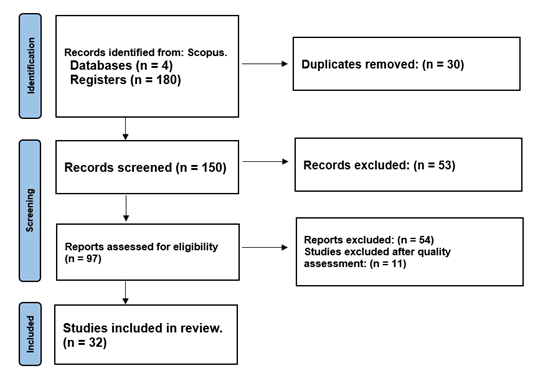
Figure 2. Flow diagram of document selection adapted from the PRISMA 2020 model (Page et al., 2021)
3.5. Quality assessment and risk of bias
To ensure the validity of the results, the included studies were evaluated using the quality criteria proposed by the Critical Appraisal Skills Programme (CASP). Three dimensions were considered:
(a) methodological validity (clarity of objectives, consistency of design, and analytical rigor),
(b) theoretical and practical relevance, and
(c) transparency in the presentation of results.
Only articles that received a positive assessment in at least two of the three dimensions were included in the final synthesis.
3.6. Analysis and synthesis strategy
Data analysis was conducted through a qualitative thematic synthesis, which allowed for the identification of core concepts, trends, and emerging approaches regarding the relationship between PE and RSE. The studies were grouped according to conceptual and applied dimensions, considering variables such as future vision, uncertainty analysis, scenario building, strategic innovation, and corporate sustainability. Comparative matrices were subsequently developed to facilitate the identification of convergences, divergences, and knowledge gaps.
3.7. Ethical considerations and declaration of interests
This study did not require ethical approval, as it was based exclusively on secondary and publicly accessible sources. The authors declare that there are no conflicts of interest and that no external funding was received for this research. The review was not registered in PROSPERO or in any other systematic review protocol database.
4. Results
This section presents a critical analysis of the reviewed studies with the aim of identifying the main contributions and challenges of PE in improving RSE practices.
4.1. Role of PE in RSE
PE is a key tool in organizational management, as it enables the anticipation of future scenarios and the design of sustainable strategies. Within the context of RSE, its application facilitates the alignment of corporate practices with emerging environmental, social, and economic challenges. According to Demneh et al. (2023), PE enhances business management by providing a framework for decision-making based on the anticipation of trends. This approach allows organizations to design RSE strategies that not only respond to current needs but are also resilient to future changes.
Fergnani (2022) further emphasizes that PE represents a new frontier in corporate management, as it enables firms to develop adaptive and sustainability-oriented capabilities. In the context of RSE, this translates into the implementation of policies that minimize negative impacts and maximize social and environmental benefits. Similarly, Marinković et al. (2022) highlight that PE plays an essential role in future-oriented planning processes by enabling organizations to identify innovation opportunities within their RSE approaches. The integration of this perspective into corporate management strengthens organizations’ capacity to address global challenges such as climate change and social inequality.
Moscoso-Paucarchuco (2024), in turn, identifies PE as a fundamental dimension within environmental auditing that directly influences the improvement of RSE practices. With a correlation coefficient of 0.520 and a statistically significant p-value (< 0.05), the study demonstrates that the ability to anticipate future scenarios strengthens responsible decision-making in organizations. Qualitative findings indicate that interviewed auditors emphasize that foresight not only allows environmental risks to be anticipated but also supports the design of sustainable strategies that align business management with collective well-being and environmental protection. This dimension is conceived as a mandatory strategic procedure capable of promoting an organizational culture oriented toward sustainable development.
4.2. Challenges for implementation in RSE
The implementation of PE within RSE presents several challenges. One of the main obstacles is resistance to change within organizations. Many firms continue to operate under traditional management models that prioritize short-term results over long-term sustainability (Fathi et al., 2021). Another significant challenge is the lack of knowledge regarding foresight methodologies. According to Gordon et al. (2020), many organizations lack the necessary tools to apply PE effectively, limiting their capacity to anticipate risks and opportunities in the field of RSE.
In addition, stakeholder involvement represents a critical aspect in the implementation of PE. Fergnani et al. (2020) argue that future scenario building should be a participatory process in which employees, customers, and communities contribute their perspectives on the desired future. However, achieving such collaboration can be complex due to the diversity of interests and expectations involved. Calof et al. (2020) also point out that integrating PE into RSE requires significant investment in research and development. Organizations must allocate resources to data collection and analysis, which may pose financial and operational challenges. Likewise, Moscoso-Paucarchuco (2024) notes the existence of structural and cultural limitations that hinder the effective implementation of PE within the RSE context. Table 2 presents the main challenges identified. These obstacles limit organizations’ capacity to incorporate foresight as a central axis of their social responsibility efforts.
Table 2. Main challenges in implementing PE within the RSE context
|
Challenge |
Description |
|
Lack of systematization |
Prevents smooth integration between auditing and strategic planning |
|
Limited institutionalization |
Environmental auditing as a foresight tool, weak regulation, voluntary RSE |
|
Resistance to change |
Business actors prioritize short-term and reactive approaches |
|
Absence of incentives |
Lack of regulatory and technical incentives for anticipatory and sustainable practices |
Note: Adapted from Moscoso-Paucarchuco (2024).
4.3. Importance of PE in RSE planning
The reviewed studies show that PE can enhance RSE practices in several ways (Fathi et al., 2021; Linares-Barbero & De La Vega, 2024). First, by anticipating future changes, organizations can adapt and develop more sustainable strategies (Fergnani et al., 2020; Gordon et al., 2020). Second, PE fosters innovation, which can lead to more responsible and environmentally friendly solutions (Calof et al., 2020). Third, PE improves organizations’ ability to manage risks and seize opportunities, resulting in more effective RSE management (Mohammadi, 2023).
Moreover, PE is fundamental to RSE planning because it enables organizations to design more robust strategies aligned with societal expectations. In this regard, Mohammadi (2023) indicates that PE strengthens firms’ dynamic capabilities, allowing them to adapt to environmental changes and improve RSE performance. Planning based on PE helps organizations develop more responsible and competitive business models. Likewise, Linares-Barbero and De La Vega (2024) emphasize that PE drives innovation in business management, translating into the implementation of more effective RSE practices. The ability to anticipate trends enables firms to develop innovative solutions to social and environmental problems.
It is also noted that established companies need to develop their capacity to identify weak signals of emerging disruptive changes through an open and agile approach. This is particularly relevant if they aim to address “more radical and disruptive sociotechnical changes that may be necessary to achieve sustainability” (Wiener et al., 2020). Therefore, foresight —especially when applied through collaborative and open approaches— can be a promising practice to help firms identify opportunities and risks associated with disruptive change and inspire sustainability-oriented innovation. Finally, Fathi et al. (2021) argue that PE contributes to organizational resilience by ensuring that firms can face future challenges without compromising their commitment to sustainability. Integrating this approach into RSE planning is key to ensuring a positive long-term impact.
Moscoso-Paucarchuco (2024) concludes that PE is essential for articulating environmental auditing with RSE, as it enables the projection of future scenarios, the anticipation of impacts, and the design of sustainable responses. This prospective dimension contributes, among other aspects, to consolidating a culture of sustainability that goes beyond regulatory compliance and translates into social and environmental value. Overall, the findings demonstrate that PE not only improves the quality of environmental auditing but also enhances the transformative capacity of RSE, turning it into a comprehensive and future-oriented planning tool. Taken together, the reviewed results confirm that PE constitutes a central axis of corporate sustainability by integrating anticipation, environmental auditing, and RSE into a future-oriented management vision. This finding is examined in greater detail in the Discussion section.
4. Discussion
The results of this systematic review confirm the central hypothesis of the study: PE significantly contributes to improving RSE practices. The findings show that organizations that incorporate anticipatory tools achieve greater resilience, innovation, and alignment with the Sustainable Development Goals. This effect is observed both in international contexts and in the Peruvian case, where the articulation between environmental auditing and RSE shows a positive correlation (Moscoso-Paucarchuco, 2024).
These results are consistent with the arguments of Fergnani (2022) and Demneh et al. (2023), who maintain that corporate foresight expands firms’ adaptive capacity in uncertain scenarios. They also align with Fathi et al. (2021), demonstrating that foresight strengthens organizational resilience and consolidates sustainable competitive advantages. In contrast, some studies by Gordon et al. (2020) and Calof et al. (2020) warn that the adoption of foresight methodologies remains limited in companies that prioritize short-term horizons or lack an anticipatory culture. In this sense, the present study provides additional evidence by contextualizing these findings in Latin America, a region where foresight has not yet been institutionalized within RSE frameworks.
From a theoretical perspective, this research expands understanding of the link between PE and business sustainability under the dynamic capabilities approach (Teece, 2007). The results demonstrate that foresight not only enhances adaptability and organizational learning but also acts as a catalyst for ethical and social innovation. On a practical level, its potential to strengthen environmental auditing, anticipate regulatory risks, and improve business efficiency is highlighted, enabling organizations to design strategies more consistent with long-term sustainability demands. Despite these contributions, the study has some limitations. The analysis is restricted to the 2020–2025 period and relies on secondary sources, which prevents direct statistical inferences. In addition, the limited regional scientific output constrains the generalization of results to the Latin American context. However, these constraints do not invalidate the findings; rather, they underscore the need to expand empirical research on the institutionalization of foresight within RSE.
In terms of future research, it is recommended to develop longitudinal and comparative studies that analyze the evolution of foresight across different sectors and Latin American countries. It would also be relevant to explore its application in MYPES and public entities, where anticipatory planning can generate significant impacts on sustainability, innovation, and environmental policies. Overall, the evidence reinforces the argument that PE should be considered a guiding principle of responsible management, capable of articulating ethics, efficiency, and sustainability within an integrated vision of the business future.
5. Conclusions
This study demonstrates that PE helps improve RSE. Organizations that apply anticipatory tools can better prepare for change, innovate, and make more sustainable decisions. This strengthens their commitment to the environment, society, and long-term development. Foresight enables a broader view of the future, helping firms adapt, learn, and respond responsibly to environmental challenges. When integrated into management, it promotes a culture of innovation, ethics, and sustainability.
In practice, applying foresight in business management improves efficiency and reduces risks. It also supports the development of strategies that are more consistent with sustainable development goals and societal needs. In contexts such as Peru, its adoption can be key to consolidating more responsible and modern management practices. The study acknowledges certain limitations, such as the use of secondary information and the focus on a recent period. Nevertheless, it provides a solid foundation for further research on how anticipation can strengthen business sustainability.
Future studies are recommended to examine the application of foresight across different sectors and types of organizations. It is also suggested to explore its use in public policies and in fostering a future-oriented organizational culture. In summary, PE is not only a planning tool; it is a way of thinking that encourages organizations to act with vision, responsibility, and innovation. Its integration into business management can transform it into a driver of change toward more sustainable development.
Author Contributions: The author was solely responsible for the conceptualization, methodology, data collection, analysis, interpretation of results, and writing of the manuscript. The author has read and approved the final version of the manuscript.
Funding: This research received no external funding.
Data Availability Statement: The data supporting the findings of this study are included within the manuscript.
Conflicts of Interest: The authors declare no conflicts of interest.
Appendix A
Appendix A.1. PRISMA 2020 Checklist
This systematic review was conducted and reported according to the PRISMA 2020 Statement (Page et al., 2021). The following checklist summarizes how each of the 27 PRISMA items was addressed in the manuscript. Items marked “Not applicable” correspond to elements required only for quantitative meta-analyses, which do not apply to the qualitative synthesis design of this study.
Table A1. This is PRISMA checklist.
|
No. |
PRISMA 2020 Item (Main Criterion) |
Compliance in the Study |
Page / Section |
|
1 |
Title — Identify the report as a systematic review |
Yes |
Title Page |
|
2 |
Abstract — Structured summary according to PRISMA |
Yes |
Title Page |
|
3 |
Rationale — Context and justification of the study |
Yes |
Introduction |
|
4 |
Objectives — Clear research objectives/questions |
Yes |
End of Introduction |
|
5 |
Eligibility criteria — Inclusion / exclusion criteria |
Yes |
Methods 3.3 |
|
6 |
Information sources — Databases and dates of search |
Yes |
Methods 3.2 |
|
7 |
Search strategy — Keywords and Boolean operators |
Yes |
Methods 3.2 |
|
8 |
Selection process — Screening and PRISMA stages |
Yes |
Methods 3.4 |
|
9 |
Data collection process |
Not applicable (qualitative synthesis, no meta-analysis) |
— |
|
10 |
Data items — Variables / themes extracted |
Yes |
Methods 3.6 |
|
11 |
Risk of bias in individual studies |
Yes (using CASP criteria) |
Methods 3.5 |
|
12 |
Effect measures |
Not applicable (qualitative approach) |
— |
|
13 |
Synthesis methods — How data were combined |
Yes |
Methods 3.6 |
|
14 |
Reporting bias assessment |
Not applicable (no statistical aggregation) |
— |
|
15 |
Certainty of evidence assessment |
Partially covered via CASP evaluation |
Methods 3.5 |
|
16 |
Study selection results — Flow diagram and counts |
Yes |
Results 4 / Figure 2 |
|
17 |
Study characteristics |
Yes |
Results 4 |
|
18 |
Results of individual studies |
Yes |
Results 4.1–4.3 |
|
19 |
Results synthesis |
Yes |
Results and Discussion |
|
20 |
Reporting biases |
Not applicable (no meta-analysis) |
— |
|
21 |
Certainty of evidence results |
Partial |
Discussion |
|
22 |
Summary of evidence |
Yes |
Discussion 5 |
|
23 |
Limitations of evidence |
Yes |
Discussion 5.2 |
|
24 |
Conclusions |
Yes |
Conclusions 6 |
|
25 |
Funding |
Yes — no external funding declared |
Methods 3.7 |
|
26 |
Competing interests |
Yes — none declared |
Methods 3.7 |
|
27 |
Registration and protocol |
Not registered in PROSPERO — explicitly stated |
Methods 3.7 |
References
Barauskaite, G., & Streimikiene, D. (2021). Corporate social responsibility and financial performance of companies: The puzzle of concepts, definitions and assessment methods. Corporate Social Responsibility and Environmental Management, 28(1), 278-287. https://doi.org/10.1002/csr.2048
Belk, R. W., Belanche, D., & Flavián, C. (2023). Key concepts in artificial intelligence and technologies 4.0 in services. Service Business, 17(1), 1–9. https://doi.org/10.1007/s11628-023-00528-w
Brandtner, P., & Mates, M. (2021). Artificial intelligence in strategic foresight – Current practices and future application potentials: Current practices and future application potentials. In Proceedings of the 2021 12th International Conference on E-business, Management and Economics (ICEME '21) (pp. 75–81). Association for Computing Machinery. https://doi.org/10.1145/3481127.3481177
Booth, A., Sutton, A., & Papaioannou, D. (2016). Systematic approaches to a successful literature review (2nd ed.). SAGE Publications. https://goo.su/X3HqI
Calof, J., Meissner, D., & Vishnevskiy, K. (2020). Corporate foresight for strategic innovation management: the case of a Russian service company. Foresight, 22(1), 14-36. https://doi.org/10.1108/FS-02-2019-0011
Carayannis, E. G., Dumitrescu, R., Falkowski, T., Papamichail, G., & Zota, N. R. (2025). Enhancing SME Resilience through Artificial Intelligence and Strategic Foresight: A Framework for Sustainable Competitiveness. Technology in Society, 102835. https://doi.org/10.1016/j.techsoc.2025.102835
Demneh, M. T., Zackery, A., & Nouraei, A. (2023). Using corporate foresight to enhance strategic management practices. European Journal of Futures Research, 11, 5. https://doi.org/10.1186/s40309-023-00217-x
Fathi, M., Yousefi, N., Vatanpour, H., & Mohammadi, R. (2021). The effect of organizational resilience and strategic foresight on firm performance: competitive advantage as mediating variable. Iranian Journal of Pharmaceutical Research, 20(4), 497-510. https://doi.org/10.22037/ijpr.2021.116145.15723
Fergnani, A. (2022). Corporate foresight: A new frontier for strategy and management. Academy of Management Perspectives, 36(2), 820-844. https://doi.org/10.5465/amp.2018.0178
Fergnani, A., Hines, A., Lanteri, A., & Esposito, M. (2020). Corporate foresight in an ever-turbulent era. European business review, 25, 26-33. https://goo.su/Wtm98
Gordon, A. V., Ramic, M., Rohrbeck, R., & Spaniol, M. J. (2020). 50 Years of corporate and organizational foresight: Looking back and going forward. Technological Forecasting and Social Change, 154, 119966. https://doi.org/10.1016/j.techfore.2020.119966
Hernández-Sampieri, R., Fernández, C., & Baptista, M. del P. (2022). Metodología de la investigación (7.ª ed.). McGraw-Hill. https://goo.su/yZAzvY
Kitchenham, B. (2004). Procedures for performing systematic reviews. Keele University. https://www.inf.ufsc.br/~aldo.vw/kitchenham.pdf
Linares-Barbero, C., & De La Vega, I. (2024). The impact of strategic foresight on innovation: A systematic literature review. IEEE Engineering Management Review. https://doi.org/10.1109/EMR.2024.3454630
Lu, J., Ren, L., Zhang, C., Rong, D., Ahmed, R. R., & Streimikis, J. (2020). Modified Carroll’s pyramid of corporate social responsibility to enhance organizational performance of SMEs industry. Journal of Cleaner Production, 271, 122456. https://doi.org/10.1016/j.jclepro.2020.122456
Marinković, M., Al-Tabbaa, O., Khan, Z., & Wu, J. (2022). Corporate foresight: A systematic literature review and future research trajectories. Journal of Business Research, 144, 289-311. https://doi.org/10.1016/j.jbusres.2022.01.097
Mohammadi, R. (2023). The role of strategic foresight on dynamic capabilities. International Journal of Innovation in Management, Economics and Social Sciences, 3(1), 40-45. https://doi.org/10.52547/ijimes.3.1.40
Moscoso-Paucarchuco, K. M. (2024). Integrating environmental auditing and corporate social responsibility in Peru. Prometeica, 31, 95–108 https://doi.org/10.34024/prometeica.2024.31.18798
Page, M. J., McKenzie, J. E., Bossuyt, P. M., Boutron, I., Hoffmann, T. C., Mulrow, C. D., … Moher, D. (2021). The PRISMA 2020 statement: An updated guideline for reporting systematic reviews. BMJ, 372, n71. https://doi.org/10.1136/bmj.n71
Petticrew, M., & Roberts, H. (2006). Systematic reviews in the social sciences: A practical guide. Blackwell Publishing. https://doi.org/10.1002/9780470754887
Spaniol, M. J., & Rowland, N. J. (2022). Business ecosystems and the view from the future: The use of corporate foresight by stakeholders of the Ro-Ro shipping ecosystem in the Baltic Sea Region. Technological Forecasting and Social Change, 184, 121966. https://doi.org/10.1016/j.techfore.2022.121966
Teece, D. J. (2007). Explicating dynamic capabilities: The nature and microfoundations of (sustainable) enterprise performance. Strategic Management Journal, 28(13), 1319–1350. https://doi.org/10.1002/smj.640
Tranfield, D., Denyer, D., & Smart, P. (2003). Towards a methodology for developing evidence‐informed management knowledge by means of systematic review. British Journal of Management, 14(3), 207–222. https://doi.org/10.1111/1467-8551.00375
Van der Duin, P., Trott, P., & Marzi, G. (2024). Tomorrow is already here: Exploring how corporate foresight can contribute to ambidexterity. Strategic Change, 33(3), 187-200. https://doi.org/10.1002/jsc.2574
Wiener, M., Gattringer, R., & Strehl, F. (2020). Collaborative open foresight-A new approach for inspiring discontinuous and sustainability-oriented innovations. Technological Forecasting and Social Change, 155, 119370. https://doi.org/10.1016/j.techfore.2018.07.008
Disclaimer/Publisher’s Note: The statements, opinions, and data contained in all publications are solely those of the individual authors and contributors, and do not necessarily reflect those of Ceniiac Journal of Negocios Globales, its publisher, or the editors. Neither the journal, the publisher, nor the editors assume responsibility for any harm to people or property resulting from the use of any ideas, methods, instructions, or products mentioned in the content.