
Review Article
Challenges of gender equality within the framework of sustainable development
1 Facultad de Derecho, Universidad de Córdoba, Montería 230002, Colombia; angelicaochoad@correo.unicordoba.gov.co; https://orcid.org/0000-0002-9450-2110
2 Universidad Pontificia Bolivariana; Montería 230001, Colombia; ana.sanchezs@upb.edu.co; https://orcid.org/0000-0002-9042-2666
* Correspondence: angelicaochoad@correo.unicordoba.gov.co
Received: 2025-10-29 | Revised: 2025-12-18 | Accepted: 2025-12-19 | Published: 2025-12-20
Citation: Ochoa-Díaz, A., & Sanchez Sanchez, A. C. Challenges of gender equality within the framework of sustainable development. Ceniiac, e0006. https://doi.org/10.64923/ceniiac.e0006
Copyright: © 2025 by the authors. Licensee Negocios Globales, Maracaibo, Venezuela. This article is an Open Access article distributed under the terms and conditions of the Creative Commons Attribution (CC BY) license.
ISSN: 3105-6237 (online).


Abstract: Gender equality is central to achieving the Sustainable Development Goals (SDGs), yet persistent gaps continue to limit women’s participation in multiple domains. This study examines four dimensions of gender inequality: economic participation, political representation, gender-based violence, and the role of scientific production. A mixed-methods design was applied, combining bibliometric and qualitative approaches to analyze 370 open-access documents indexed in Scopus from 2018 to 2023. Findings show that women remain underrepresented in the labor market, concentrated in less productive sectors, and burdened with unpaid work, which undermines economic equity. In politics, only a few countries have achieved parliamentary parity, while global progress remains slow. Gender-based violence persists as one of the most critical challenges, with more than half of femicides occurring in the home, revealing the insecurity of domestic spaces for women. Scientific production on gender equality has grown, yet female authors remain underrepresented, highlighting the persistence of the “glass ceiling”. These results confirm a gap between formal equality recognized in laws and substantive equality experienced in practice. Stronger state commitments, affirmative policies, and inclusive strategies are needed to ensure that gender equality is not only a right but also a driver of sustainable development.
Keywords: sustainable development; gender equality; sustainable development goals; SDGs; women's empowerment; gender discrimination; economic participation; gender-based violence; gender inequalities
1. Introduction
The conception of the Sustainable Development Goals (SDGs) arises because of research conducted by the International Union for Conservation of Nature (IUCN) in the 1980s (Rural, 1998). These SDGs aim to ensure societal prosperity and preserve human life worldwide. This approach encompasses social, economic, cultural aspects, and the use of natural resources, focusing on the well-being of both present and future generations (Bayhantopcu & Aymerich Ojea, 2023; Bell et al., 2016; Sajwani & Al-Othman, 2023).
Sustainable development seeks to balance economic growth with the preservation of the ecological environment (Capmourteres et al., 2019; Gatto, 2023), promoting the connection between nature (Asadikia et al., 2023; Nofrima et al., 2023), technology (López-Iñesta et al., 2020; Tang, 2022), culture, and community to efficiently meet human needs (Rivera-Hernández et al., 2017).
This approach is based on the consumption and distribution of natural resources under market standards to generate equal opportunities for all, either directly or through state-driven mechanisms (Márquez Ortiz et al., 2020). Among the three fundamental objectives of sustainable development lies social, economic, and environmental equality (Camussi et al., 2023; Capmourteres et al., 2019). Equity is based on egalitarian negotiations among different sectors, implying a constant analysis of the actions to be taken (Dourojeanni, 2000).
Gender equality is crucial in this global agenda, as the interconnection between the SDGs and gender equality is essential to achieve a more equal, just, and sustainable world (Marcelo Gómez & Alegre jara, 2023). Despite international efforts and laws promoting gender equality, its implementation faces significant obstacles (Bublienė & Jurkevičius, 2019; Odeyinde, 2021; Yount et al., 2020).
Women's empowerment aims to recognize women's human rights, especially in the context of the Sustainable Development Goals (SDGs), particularly concerning goal number 5, which focuses on gender equality and the elimination of gender-based violence (Consolo & Bauger, 2023). Formal equality, although reflected in legal documents, is often insufficient to address the entrenched inequality in society. Real equality is still far from being achieved, justifying the inclusion of gender equality as one of the objectives of the SDGs (Valpuesta Fernández, 2009). Gender equality is not only a human right but also a tool for building a more sustainable world (Castillo & Sáez, 1998; Singleton et al., 2019; Sporre, 2020)
This study examines the challenges faced by sustainable development in achieving gender equality, considering that equal rights are a fundamental principle in constitutionalism. Gender inequalities affect economic participation and sustainable development and overcoming them is crucial to achieving the SDGs (Marrero Peniche, 2019). Despite global efforts and existing legislation, there are areas where research is limited or a more detailed approach is needed (Espina-Romero, 2023a, 2023b). In this context, the following research questions were formulated:
RQ1. How do gender inequalities affect economic participation and sustainable development, and what is the impact of these inequalities on achieving the Sustainable Development Goals?
RQ2. How has women's intervention in global parliaments influenced the promotion of gender equality in the political arena?
RQ3. What is the magnitude and impact of gender-based violence in the home, and what are the strategies and challenges to improve women's safety in this environment?
RQ4. What is the role of scientific production in advancing gender equality within the context of the Sustainable Development Goals, and how does female gender participation and representation manifest in this field?
The central aim of this study is to conduct a mixed analysis that combines bibliometric quantitative methods and qualitative analyses on manuscripts from the Scopus database during the period 2018-2023. This study aims to address these issues by analyzing the interaction between gender inequalities and sustainable development. Through an analysis of scientific literature and female participation in global parliaments, as well as an assessment of the magnitude and impact of gender-based violence at home, this research seeks to shed light on strategies and challenges to enhance women's safety in this environment.
Additionally, it will examine the role of scientific production in promoting gender equality within the context of Sustainable Development Goals and explore the representation of women in this field. The aim is to enrich the knowledge base and provide key data to promote a world characterized by equity, justice, and sustainability. In this document, following the Introduction, the description of applied methodologies will be presented, followed by relevant results, discussions, and conclusions, to address the research questions.
2. Materials and Methods
This research poses four research questions identified as RQ1, RQ2, RQ3, and RQ4. To address these questions, four specific objectives identified as O1, O2, O3, and O4 must be met:
O1. Analyze how gender inequalities impact economic participation and sustainable development, additionally evaluate how these inequalities affect the achievement of the Sustainable Development Goals (SDGs).
O2. Investigate the influence of women's intervention in global parliaments in promoting gender equality in the political arena and evaluate its effectiveness in achieving gender equality.
O3. Determine the magnitude and impact of gender-based violence in the home, as well as identify strategies and challenges to improve women's safety in this environment.
O4. Analyze the role of scientific production in advancing gender equality in the context of the Sustainable Development Goals (SDGs) and simultaneously examine how female gender participation and representation manifest in this field.
This study adopted a mixed methodological approach (Aria & Cuccurullo, 2017), combining bibliometric and qualitative techniques to examine documents related to gender equity and the Sustainable Development Goal (SDG) during 2018-2023. The documents were selected from the Scopus database, a widely recognized source for its temporal coverage and thematic diversity (Burnham, 2006).
The bibliometric approach followed a five-step process according to Zupic and Cater (2015), which included study design, bibliometric data collection, analysis, visualization, and interpretation (see Figure 1). In the study design phase, four research questions were formulated based on a previous literature review. Microsoft Excel was used to create column charts and a thematic map to answer these questions (Meyer & Avery, 2009), aiming to visualize the evolution of women's economic inclusion, gender equality in decision-making positions, and the percentage of gender-based violence worldwide.
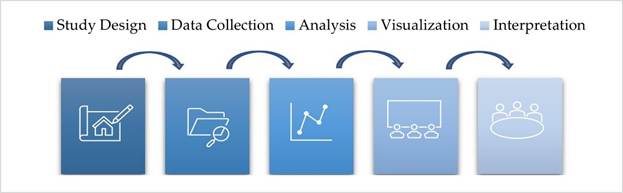
Figure 1. Methodological design steps.
The collection of bibliometric data in Scopus involved selecting a sample of 370 documents from a population of 792 containing specific keywords related to gender equality and SDGs. The search string generated was as follows: "TITLE ('gender equality' OR 'women empowerment' OR 'gender discrimination') AND TITLE-ABS-KEY ('Sustainable development goal' OR 'sdg' OR 'sustainability') AND (LIMIT TO (PUBYEAR, 2023) OR LIMIT TO (PUBYEAR, 2022) OR LIMIT TO (PUBYEAR, 2020) OR LIMIT TO (PUBYEAR, 2021) OR LIMIT TO (PUBYEAR, 2020) LIMIT TO (PUBYEAR, 2019) OR LIMIT TO (PUBYEAR, 2018)). This search was restricted to open-access documents and focused on recent publications, delineating the study period from 2018 to 2023. The collected data were stored and processed using Microsoft Excel 365 and RStudio to ensure quality and feasibility.
Data analysis was carried out using statistical and data visualization tools. Microsoft Excel 365 was used to visualize the production of the most prominent publications, while RStudio version 4.3.2 facilitated the visualization of the most investigated study topics and researchers' gender. Regarding the qualitative approach, it was integrated into the interpretation of bibliometric data. The combination of these approaches allowed not only a quantitative and systematic analysis of scientific literature but also a deeper and contextual evaluation of emerging patterns and trends in gender equality and sustainable development.
3. Results
3.1 Gender Equality Challenges under the SDG.
The United Nations General Assembly, in its 2015 agenda on the Sustainable Development Goals (SDGs), outlined a roadmap for all countries worldwide to follow until 2030. This roadmap sets forth key objectives for the benefit of the community, the world, and prosperity. One of the primary aims is to achieve the fulfillment of the inherent rights of all human beings and attain the long-awaited gender equality and women's empowerment. It is understood that sustainable development cannot be achieved by denying approximately half of the population equal access to education, economic resources, political participation, and other opportunities afforded to the male gender in their professional pursuits, leadership roles, and decision-making processes in their lives (NU. CEPAL, 2019).
The fight for gender inequality has been a long historical process, spanning various eras and movements in pursuit of advancing the human rights of women. From ancient times to the present day, women have faced discrimination and inequality based on their gender at birth, and their struggle for equality has made a positive impact on society (Cumes, 2009). As an example, we can look at the suffragist movement of the 19th and early 20th centuries, which fought for women's right to vote. They finally achieved suffrage in 1848 at Seneca Falls, New York (Castaño Sanabria, 2016).
Similarly, in the mid-20th century, further significant advancements were made in recognizing women's rights such as reproductive rights, access to higher education, and entry into the workforce in areas previously reserved solely for men. Additionally, public policies and laws have been created to eradicate discrimination and violence against women (Duarte Cruz & García-Horta, 2016). However, the struggle for the recognition of women's rights brings about significant challenges in the sphere of sustainable development for gender equality and women's empowerment within the framework of the 2030 agenda, as we will see below.
3.2. Gender Inequalities and Their Impact on Economic Participation and Sustainable Development.
To achieve the SDGs, it is necessary to create full and productive employment by fostering creativity, innovation, formalization, and economic growth (NU. CEPAL, 2019). Currently, there are undeniable gender gaps in access to work, which undermines gender equality and SDGs. Women represent a lower rate of access to employment and a higher involvement in weak and less productive areas compared to men (Sasmoko et al., 2022). Sociocultural gender stereotypes have relegated women to the private sphere, consisting of domestic work, resulting in an excess of unpaid work that acts as a barrier to the full inclusion of women in the workforce (Ratwatte, 2023).
This type of unpaid work has often been invisible in the study of mainstream economics, undervaluing work that sustains part of the global economy. Therefore, one of the most outstanding challenges of the SDGs is the social renewal of humanity to achieve gender equity (Vaca Trigo, 2019). Nowadays, the female gender only enjoys a quarter of the rights granted to the male gender, and approximately two billion four hundred million of those who meet the age requirement to enter the labor market still do not have the same rights as men in the legal system (Saini et al., 2023).
The global average for the female gender stands at 77.1% out of 100% in the year 2022, surpassing the previous year by only half a point. Currently, fourteen global economies, including Ireland, Germany, Denmark, Belgium, Canada, Iceland, Latvia, Spain, Luxembourg, France, Greece, the Netherlands, Sweden, Portugal, have a rating of 100% on the global index, meaning that both women and men have equal legal conditions (Banco Mundial, 2023).
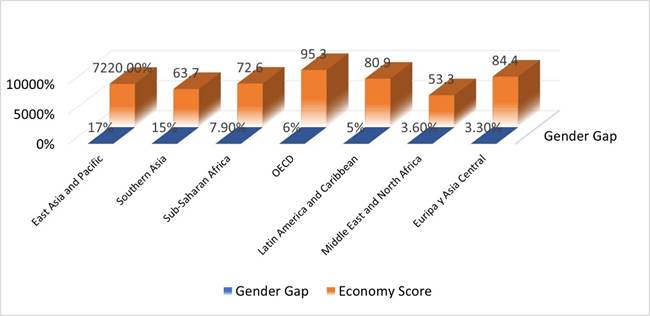
Figure 2. Women Facing Unequal Rights Compared to Men.
In Figure 2, it can be observed that, of the two billion four hundred million women of working age who currently do not enjoy equal rights as men, more than 50% of these women reside in East Asia and the Pacific (17%) and South Asia (15%), followed by Sub-Saharan Africa (7.90%), high-income countries of the Organization for Economic Co-operation and Development (OECD) (6%), Latin America and the Caribbean (5%), the Middle East and North Africa (3.60%), and Europe and Central Asia (3.30%).
Now, if we observe the percentage of the average score of the economy in all countries regarding female participation, we find that it is 77.1% out of 100. However, we can see that three of the economies with scores above the global average are in the high-income regions of the OECD, Latin America and the Caribbean, Europe, and Central Asia. In contrast, the lowest scores are found in the Middle East, South Asia, and North Africa.
3.3. Gender Equality in the Political Arena: An Analysis of Women's Intervention in Global Parliaments
For the effective achievement of SDG goal number 5, it is essential to include modifications in the actions of all individuals and public and private entities. In short, this means that the behavior of individuals must be regulated through institutions via norms, laws, customs, state institutions, parliaments, and non-governmental organizations (Moller, 2010).
Therefore, the Convention on the Elimination of All Forms of Discrimination against Women (CEDAW), in its Article 7, urges all countries worldwide to take appropriate and relevant actions so that women can access elected positions under the same conditions, actively participate in the establishment and implementation of public policies, and hold public office (United Nations General Assembly, 1979). All this considering that access to public power has been difficult for women, and therefore, they continue to be constantly excluded from decision-making processes necessary to advance gender equality (Venegas, 2013).
In recent decades, parity has been established as the binding principle of a new prototype of democracy called parity democracy, which is nothing more than the union between democracy and parity. This model is based on the real questioning of the inclusion of representative democracy since its purpose is to break with the social and cultural prototype that the male gender is the representative of the political arena and the female gender is confined to the domestic sphere (Blanco-González et al., 2020). This division would mean that, despite the recognition of the right to equality, independence, and dignity of human beings in different constitutions worldwide, the female gender persists in a context of disempowerment and structural submissiveness (Ponce de León Solís, 2021).
Therefore, parity is a democratic principle that has a huge task in the battle to achieve gender equality. Its aim is to contribute to the construction of a representative democracy through equitable representation between women and men, meaning that for every person elected, there should be an alternating female and male sex until achieving a 50% participation for each gender (Asadikia et al., 2023). Through Figure 3, we will analyze the percentage of women who have been democratically elected in parliaments.
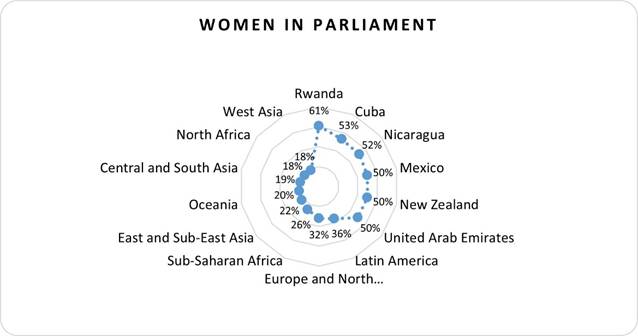
Figure 3. Women who have been democratically elected to parliaments (UNWOMEN, 2023).
In Sub-Saharan Africa, there is a (26%) representation of women in legislation, while in East and Southeast Asia, we find a percentage of (22%); in Oceania, there's (20%); in Central and Southern Asia, (19%); and finally, North Africa and Western Asia, with (18%) of women in parliament. It is of utmost importance to note that since January 2023, there have been 31 countries where 34 women serve as heads of Government or State. If the situation does not improve, gender equality at the highest levels of decision-making will not be achieved for at least another 130 years (Grañó Calvete, 2023).
3.4. Gender-Based Violence, its struggle, and the Challenge of Women's Safety in the Home
Gender-based violence is a cultural, social, and political issue linked to the imbalance of power between women and men, occurring simultaneously worldwide (Ochoa Díaz, 2020). In fact, this type of violence can be defined as a chain of harmful actions and practices against females, resulting in physical, psychological, sexual, economic, among other damages for them, including coercion, threats, and illegal deprivation of freedom in both private and public life (Klugman, 2017).
The occurrence of violence against the female gender is a recurring issue in the lives of one in three women (United Nations, 2021), a situation that has alarmed the global community and thus prompted the need to create commitments to eliminate this social problem. As a result, the United Nations aims, within the 5th Sustainable Development Goal, to achieve gender equality and empower women, not only to end the phenomenon of discrimination against them but also to eliminate the violence that affects them. To understand the magnitude of the problem at the international level, it is necessary to conduct a statistical review of the state of violence against the female gender.

Figure 4. Total homicides linked to a partner or family member over all homicides of women and men by country (UNODC, 2022).
From the total number of women who were victims of femicide in 2021, as depicted in Figure 4, it is evident that approximately 56% were killed by their partner or a family member, indicating that home is not the safest place for the female gender. Conversely, males are at a higher risk of being murdered by someone outside their family circle. Of all homicides involving male victims in 2021, only 11% were killed by their romantic partner or another family member. Similarly, regional disparities can be observed regarding homicidal violence against both genders in the private sphere.
The preceding figure suggests that regions experiencing fewer intentional homicides against women are Europe and Asia, where the percentage of homicides of men related to domestic violence is higher at 17%, compared to regions with higher levels of female homicides such as Africa and the Americas, where the proportions are below 10%.
3.5. The Role of Scientific Production in the Advancement of Gender Equality in the SDGs.
The scientific community plays a crucial role in the production and dissemination of knowledge and in regulating professionals in their field of application (Brennan & Monson, 2014). Therefore, promoting gender equality is essential for societies to achieve sustainable development goals. Additionally, the involvement of women in scientific production is crucial for their empowerment and full participation in all scenarios and levels to build stronger economies, more equitable societies, and improve their well-being.
In the 1960s and 1970s, women began entering universities as students and participating in laboratory groups and research as scientists. However, unfortunately, they found themselves immersed in an environment completely dominated by men, which had been created and designed exclusively for them (Magallón Portolés, 1996). This has created what many have termed the "glass ceiling" effect, exposing the invisible obstacles that exist for women's career advancement, stemming from historical role distribution, motherhood and its challenges in the workplace, discriminations based on sexist prejudices, and deeply ingrained language unconscious biases and stereotypes (Carnes et al., 2008; Cohen & Huffman, 2003; Johns, 2013).
The situation has resulted in a low contribution of women in scientific work, sparking increased interest among researchers in significantly increasing the visibility of gender perspective in their research. Some of these writings have aimed to examine the scarce presence and invisibility of women in science, as well as the inequity in access to education and research, which affects their involvement and stability in scientific careers, research groups, and decision-making positions in the highest echelons of power (González García & Fernández Jimeno, 2016).
Incorporating a gender perspective into methodical studies and research has the positive consequence of highlighting the persistence of these inequalities in the political arena, enabling corrective actions to be taken to eradicate this scourge (García Calvente et al., 2023). To gain a comprehensive understanding in this research, it is essential to conduct a bibliometric analysis of the studies conducted by authors who contributed to the selected documents within Scopus. This will help identify the most prominent themes, assess their relevance, and understand which of this outline the main inequalities that women face in their pursuit of sustainable development (see Figure 5).
Figure 5 has been built using a sample of the most frequent keywords used by authors over the past 6 years. These keywords are closely related to gender equality and sustainable development topics. The parameters used for the number of keywords were 100 with a frequency per thousand documents, number of tags 3, and tag size 0.3. Each circle symbolizes a set of networks:
· The name of the circle is the keyword concerning the group with the highest number of repetitions.
· The size of the circle is equal to the number of word repetitions in the group.
· The placement of the circle is determined according to its centrality and density on the thematic map.
Among the core themes that approach centrality due to their relevance is "women's empowerment," but it has been less developed by the authors. Similarly, if we observe the density in which it occurs, we can determine that there has been a decline and an increase in themes related to gender inequality. This situation may be because authors have moved away from interest in women's empowerment, and there is greater concern for gender equality. Additionally, Figure 5 shows a significant growth in niche themes in South Africa with a high relevance to the 2030 agenda but isolated from the driving themes.

Figure 5. Thematic map.
On the other hand, it is crucial for this research to identify the visibility of the female gender in the production of knowledge regarding gender inequality issues. Figure 6 shows the fifteen most relevant authors who have written scientific articles on gender equality in the last 6 years. The objective of this representation is to identify women's interest in the production of scientific knowledge, with the aim of advancing gender perspective and eliminating stereotypes that have caused gender inequalities. This effort aligns with goal 5 of the 2030 agenda, which seeks to promote gender equality and empower all women (Martínez et al., 2023).
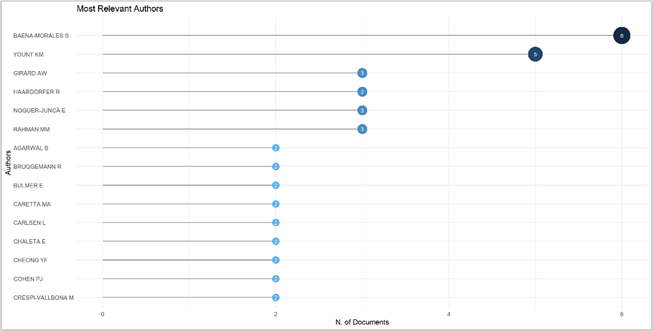
Figure 6. Most relevant authors
From the 15 selected authors, it was possible to identify that only 6 are women, leading us to infer that despite global efforts towards gender equality, there is still a limited contribution from women in the creation of science. This indicates that there is a long way ahead in achieving the goals of the Sustainable Development Goals (SDGs), making this situation a new challenge on the agenda for 2030.
4. Discussion
4.1. Impact of gender inequalities on economic participation and the SDGs (RQ1)
The results show that women continue to face barriers in accessing employment and equal labor rights. This finding is consistent with studies indicating that gender stereotypes confine women to domestic and unpaid work, limiting their participation in the formal economy (Ratwatte, 2023). While progress has been achieved in OECD and European regions, the lowest levels are observed in Africa, the Middle East, and South Asia (World Bank, 2023). These results support the argument made by CEPAL (2019) that sustainable and inclusive development cannot be achieved without gender equity.
4.2. Women’s intervention in parliaments and the promotion of political equality (RQ2)
The study confirms that only a few countries have reached gender parity in parliaments, with Rwanda and Cuba as notable examples. This aligns with the literature on “parity democracy,” which is still an emerging model (Blanco-González et al., 2020). However, the findings also reveal a gap between the legal recognition of equality and its real application in political practice. This gap supports Venegas (2013), who points out that women’s exclusion from decision-making processes remains structural.
4.3. Magnitude and impact of gender-based violence in the home (RQ3)
The data show that more than half of femicides occur in the domestic setting, confirming that the home is one of the most unsafe places for women (UNODC, 2022). This evidence is consistent with United Nations reports (2021), which indicate that one in three women worldwide experiences physical or sexual violence. Regional comparisons also reveal important differences: Europe and Asia have lower levels of domestic femicides, while Africa and the Americas report much higher figures. These results reinforce Klugman’s (2017) view that gender-based violence is a structural issue tied to unequal power relations, and they also show that existing strategies remain insufficient.
4.4. Role of scientific production in advancing gender equality (RQ4)
The bibliometric analysis shows a growing number of publications on gender equality and the SDGs but also highlights the low representation of women among the most cited authors. This finding confirms González García and Fernández Jimeno’s (2016) argument about women’s invisibility in science and the persistence of the “glass ceiling.” In addition, research trends are shifting: interest in “women’s empowerment” has declined, while attention to “gender inequality” has increased. This pattern supports García Calvente et al. (2023), who emphasize the need to mainstream gender perspectives in scientific production.
4.5. Cross-cutting discussion
Taken together, the four research questions highlight that gender inequalities remain present in economic, political, social, and scientific domains. While progress has been made in legal frameworks and academic visibility, these efforts are not enough to achieve real equality. As Valpuesta Fernández (2009) points out, the gap between formal and substantive equality continues to be the main challenge. Therefore, gender equality should not only be understood as a human right but also as a necessary condition for sustainable development.
4.6. Limitations
This study has some limitations that should be acknowledged. First, the bibliometric analysis was based exclusively on the Scopus database. While Scopus offers broad coverage, the exclusion of other databases such as Web of Science or Google Scholar may limit the scope of results. Second, the study focused on the period 2018–2023, which restricts the possibility of capturing long-term trends. Third, only open-access documents were included, which may have left out relevant studies published in restricted-access journals. Finally, the combination of bibliometric and qualitative analysis allowed for a deeper interpretation, but results depend on the accuracy of the selected keywords and the methodological choices made. These aspects should be considered when interpreting the findings.
4.7. Future Research Directions
Future research should expand the analysis to other databases, such as Web of Science, to strengthen the representativeness of results. It is also recommended to extend the time frame and perform longitudinal studies that track progress and setbacks in gender equality over several decades. Comparative studies across regions could help identify cultural and institutional factors that influence gender gaps differently. In addition, qualitative case studies in specific countries would complement the bibliometric approach, offering a closer view of the strategies applied to achieve Sustainable Development Goals. Finally, future studies should explore the integration of gender perspectives in interdisciplinary areas such as technology, climate change, and digital transformation, where the role of women remains underexplored.
5. Conclusions
Gender equality plays a decisive role in achieving the Sustainable Development Goals (SDGs). It contributes to economic growth, political inclusion, social justice, and scientific progress. However, our results confirm that significant barriers remain. First, gender gaps in the labor market continue to limit women’s participation. Women are concentrated in less productive sectors and often perform unpaid work, which reduces their economic impact. Only a small group of countries have achieved full equality in legal rights.
Second, gender parity in politics is still far from reality. Only a few countries have reached balanced representation in parliaments. At the current pace, equal participation in decision-making will not be achieved for more than a century. Third, gender-based violence remains one of the greatest challenges. More than half of femicides take place in the home, confirming that domestic spaces are often unsafe for women. This violence reflects structural power imbalances that policies have not yet resolved.
Fourth, scientific production shows progress but also clear inequalities. Women are underrepresented among leading authors, and the “glass ceiling” persists. At the same time, research topics have shifted from “empowerment” to “inequality,” showing a change in focus but also a decline in attention to women’s agency. Taken together, these findings highlight a central point: there is still a gap between formal equality, recognized in laws, and substantive equality, experienced in practice. Closing this gap is essential. Gender equality should not only be seen as a human right but also as a necessary condition for sustainable development. Achieving this requires stronger state commitment, affirmative action, and policies that support women’s economic participation, political leadership, safety, and scientific contribution.
Author Contributions: Conceptualization, A.O.-D. and A.C.S.S.; methodology, A.O.-D. and A.C.S.S.; software, A.O.-D. and A.C.S.S.; validation, A.O.-D. and A.C.S.S.; formal analysis, A.O.-D. and A.C.S.S.; investigation, A.O.-D. and A.C.S.S.; resources, A.O.-D. and A.C.S.S.; data curation, A.O.-D. and A.C.S.S.; writing—original draft preparation, A.O.-D. and A.C.S.S.; writing—review and editing, A.O.-D. and A.C.S.S.; visualization, A.O.-D. and A.C.S.S.; supervision, A.O.-D. and A.C.S.S.; project administration, A.O.-D. and A.C.S.S. All authors have read and agreed to the published version of the manuscript. The authors contributed equally to this work.
Funding: This research received no external funding.
Data Availability Statement: The data supporting the findings of this study are contained within the manuscript.
Acknowledgments: Not applicable.
Conflicts of Interest: The authors declare no conflicts of interest.
References
Aria, M., & Cuccurullo, C. (2017). bibliometrix: An R-tool for comprehensive science mapping analysis. J. Informetr., 11(4), 959–975. https://doi.org/10.1016/j.joi.2017.08.007
Asadikia, A., Rajabifard, A., & Kalantari, M. (2023). A systems perspective on national prioritisation of sustainable development goals: Insights from Australia. Geography and Sustainability, 4(3), 255–267. https://doi.org/10.1016/j.geosus.2023.06.003
Banco Mundial. (2023). La Mujer, la Empresa y el Derecho. Grupo Banco Mundial. https://acortar.link/XiVNpS
Bayhantopcu, E., & Aymerich Ojea, I. (2023). Integrated sustainability management and equality practices in universities: A case study of Jaume I University. International Journal of Sustainability in Higher Education. https://doi.org/10.1108/IJSHE-02-2023-0054
Bell, S., Berg, T., & Morse, S. (2016). Rich Pictures: Encouraging Resilient Communities. Routledge. https://doi.org/10.4324/9781315708393
Blanco-González, A., Miotto, G., Díez-Martín, F., & Prado-Román, C. (2020). Relationship between equality policies and moral legitimacy according to experts’ perceptions. Tripodos, 48, 103–116. https://doi.org/10.51698/tripodos.2020.48p103-116
Brennan, M. D., & Monson, V. (2014). Professionalism: Good for Patients and Health Care Organizations. Mayo Clinic Proceedings, 644–652. https://doi.org/10.1016/j.mayocp.2014.01.011
Bublienė, R., & Jurkevičius, V. (2019). Multiple discrimination and inequality: A comparative analysis of the European courts case law in the context of sustainable business development. Entrepreneurship and Sustainability Issues, 7(2), 1246–1257. https://doi.org/10.9770/jesi.2019.7.2(31)
Burnham, J. F. (2006). Scopus database: A review. Biomed. Digit. Libr., 3(1), 1. https://doi.org/10.1186/1742-5581-3-1
Camussi, E., Meneghetti, D., Rella, R., Sbarra, M. L., Calegari, E., Sassi, C., & Annovazzi, C. (2023). Life design facing the fertility gap: promoting gender equity to give women and men the freedom of a mindful life planning. Frontiers in Psychology, 14. https://doi.org/10.3389/fpsyg.2023.1176663
Capmourteres, V., Shaw, S., Miedema, L., & Anand, M. (2019). A complex systems framework for the sustainability doughnut. People and Nature, 1(4), 497–506. https://doi.org/10.1002/pan3.10048
Carnes, M., Morrissey, C., & Geller, S. E. (2008). Women’s health and women’s leadership in academic medicine: hitting the same glass ceiling? Journal of Women’s Health, 17(9), 1453–1462. https://doi.org/10.1089/jwh.2007.0688
Castaño Sanabria, D. (2016). El feminismo sufragista: entre la persuasión y la disrupción. Polis, 43. http://journals.openedition.org/polis/11600
Castillo, M., & Sáez, B. (1998). Amelia Valcárcel. La política de las mujeres. Diablotexto: Revista de Critica Literaria, 4(5), 405–412. https://dialnet.unirioja.es/servlet/articulo?codigo=5479566
Cohen, P. N., & Huffman, M. L. (2003). Individuals, jobs, and labor markets: The devaluation of women’s work. American Sociological Review, 68(3), 443–463. https://doi.org/10.2307/1519732
Consolo, A., & Bauger, E. (2023). Gender equality and the human rights of women and girls as sustainable development goals. Oñati Socio-Legal Series, 13(2), 589–607. https://doi.org/10.35295/osls.iisl/0000-0000-0000-1389
Cumes, A. (2009). Multiculturalismo, género y feminismos: mujeres diversas, luchas complejas. In Participación y políticas de mujeres indígenas en contextos latinoamericanos recientes (pp. 29–52). FLACSO. https://acortar.link/g8666R
Dourojeanni, A. (2000). Procedimientos de gestión para el desarrollo sustentable. CEPAL - NACIONES UNIDAS. https://acortar.link/PcYrBF
Duarte Cruz, J. M., & García-Horta, J. B. (2016). Igualdad, Equidad de Género y Feminismo, una mirada histórica a la conquista de los derechos de las mujeres. Revista CS, 18, 107–158. https://doi.org/10.18046/recs.i18.1960
Espina-Romero, L. (2023a). Collaboration and interdisciplinarity in scientific research: fostering synergy to address current challenges. IPSA Sci. Rev. Científica Multidiscip., 8(2), 8–9. https://doi.org/10.25214/27114406.1627
Espina-Romero, L. (2023b). Post-pandemic scientific dissemination. Rev. Virtual Univ. Católica Del Norte, 68, 1–3. https://doi.org/10.35575/rvucn.n68a1
García Calvente, M., Jiménez Rodrigo, M. L., & Martínez Morante, E. (2023). Guía para incorporar la perspectiva de género a la investigación en salud. Escuela Andaluza de Salud Pública. https://acortar.link/p38Lx
Gatto, A. (2023). Can renewable energy microfinance promote financial inclusion and empower the vulnerable? International Journal of Environment and Sustainable Development, 22(3), 368–373. https://doi.org/10.1504/IJESD.2023.132092
González García, M. I., & Fernández Jimeno, N. (2016). Ciencia, tecnología y género. Enfoques y problemas actuales. CTS: Revista Iberoamericana de Ciencia, Tecnología y Sociedad, 11(31), 51–60. https://doi.org/10.52712/issn.1850-0013-483
Grañó Calvete, M. (2023). Mujer y Liderazgo 2023. OBS Business School. https://url-shortener.me/44XC
Johns, M. L. (2013). Breaking the glass ceiling: structural, cultural, and organizational barriers preventing women from achieving senior and executive positions. Perspectives in Health Information Management / AHIMA, American Health Information Management Association, 10, 1e. https://acortar.link/Rc8Oa5
Klugman, J. (2017). Gender Based Violence and the Law. World Bank. https://doi.org/10.1596/26198
López-Iñesta, E., Botella, C., Rueda, S., Forte, A., & Marzal, P. (2020). Towards Breaking the Gender Gap in Science, Technology, Engineering and Mathematics. Revista Iberoamericana de Tecnologias Del Aprendizaje, 15(3), 233–241. https://doi.org/10.1109/RITA.2020.3008114
Magallón Portolés, C. (1996). ¿Extrañas en el paraíso? Mujeres en las ciencias físico- químicas en la España a principios del siglo XX. In Feminae-Editorial UGR (Ed.), Mujeres de ciencias : mujer, feminismo y ciencias naturales, experimentales y tecnológicas (pp. 13–60). https://dialnet.unirioja.es/servlet/articulo?codigo=586905
Marcelo Gómez, G., & Alegre jara, M. (2023). Education in equality: Training program for the transversalization of the gender approach. Human Review. International Humanities Review / Revista Internacional de Humanidades, 16(6), 13. https://doi.org/10.37467/revhuman.v12.4707
Márquez Ortiz, L., Cuétara Sánchez, L., Cartay Angulo, R., & Labarca Ferrer, N. (2020). Desarrollo y crecimiento económico: Análisis teórico desde un enfoque cuantitativo. Revista de Ciencias Sociales, 26(1), 233–253. https://doi.org/10.31876/rcs.v26i1.31322
Marrero Peniche, G. (2019). La perspectiva de género: una reivindicación necesaria en el ámbito educativo. Revista Educación, 43(2), 643–658. https://doi.org/10.15517/revedu.v43i2.32426
Martínez, L., García-Taibo, O., Ferriz-Valero, A., & Baena-Morales, S. (2023). Contributing to SDG Targets 4.5 and 5.5 during Physical Education Sessions: The Effect of a Collective Sports Intervention on Gender Attitudes. Societies, 13(3), 73. https://doi.org/10.3390/soc13030073
Meyer, D. Z., & Avery, L. M. (2009). Excel as a Qualitative Data Analysis Tool. Field Methods, 21(1), 91–112. https://doi.org/10.1177/1525822X08323985
Moller, R. (2010). Principios de desarrollo sostenible para América Latina. Revista Eidenar, 9, 101–110. https://www.redalyc.org/pdf/2311/231116434012.pdf
Nofrima, S., Sjahputra, H. R. T., Ruhullah, M. E., & Saputra, H. A. (2023). Analysis of the existence of ecofeminism in Indonesian civil society in the era of the Covid-19 pandemic (2020–2022). GeoJournal, 88(5), 5477–5488. https://doi.org/10.1007/s10708-023-10930-6
NU. CEPAL. (2019). La Agenda 2030 y los Objetivos de Desarrollo Sostenible: una oportunidad para América Latina y el Caribe. Naciones Unidas. https://acortar.link/N7fI77
Ochoa Díaz, A. M. (2020). Discriminación positiva como medida de protección para prevenir la violencia intrafamiliar en las mujeres en Argentina. Universidad de Ciencias Empresariales y Sociales. https://dspace.uces.edu.ar/jspui/handle/123456789/5858
Odeyinde, O. (2021). Gender Equality and Sustainable Development: Evaluating the Effectiveness of Nigerian Laws and Practices to Guarantee the Woman’s Human Right. Journal of Sustainable Development Law and Policy, 12(2), 398–420. https://doi.org/10.4314/jsdlp.v12i2.10
Ponce de León Solís, V. (2021). La paridad de género en el proceso constituyente chileno: alcances, expectativas y desafíos. Revista de Derecho Político, 112, 383–413. https://doi.org/10.5944/rdp.112.2021.32233
Ratwatte, L. (2023). Converging Crises and the Cost of Exclusion: Unveiling the Invisible Women of Sri Lanka’s Economy. Journal of International Women’s Studies, 25(3). https://vc.bridgew.edu/jiws/vol25/iss3/3
Rivera-Hernández, J. E., Blanco-Orozco, N. V, Alcántara-Salinas, G., Pascal Houbron, E., & Pérez-Sato, J. A. (2017). ¿Desarrollo sostenible o sustentable? La controversia de un concepto. Revista Posgrado y Sociedad, 15(1), 57–67. https://doi.org/10.22458/rpys.v15i1.1825
Rural, M. de A. y D. (1998). Misión rural Transición, Convivencia y Sostenibilidad Síntesis de Resultados y Conclusiones (pp. 1–38). https://acortar.link/bt43RZ
Saini, M., Adebayo, S. O., Singh, H., Singh, H., & Sharma, S. (2023). Sustainable development goals for gender equality: Extracting associations among the indicators of SDG 5 using numerical association rule mining. Journal of Intelligent and Fuzzy Systems, 44(3), 5151–5162. https://doi.org/10.3233/JIFS-222384
Sajwani, G., & Al-Othman, H. (2023). Sustainable Development: An Analytical Vision for Smart Dubai City Social Policies. Information Sciences Letters, 12(7), 2877–2889. https://doi.org/10.18576/isl/120716
Sasmoko, Shabnam, Handayani, W., Nassani, A. A., Haffar, M., & Zaman, K. (2022). Do precarious female employment and political autonomy affect the under-5 mortality rate? Evidence from 166 countries. PLoS ONE, 17(6 June). https://doi.org/10.1371/journal.pone.0269575
Singleton, R. L., Allison, E. H., Gough, C., Kamat, V., LeBillon, P., Robson, L., & Sumaila, U. R. (2019). Conservation, contraception and controversy: Supporting human rights to enable sustainable fisheries in Madagascar. Global Environmental Change, 59. https://doi.org/10.1016/j.gloenvcha.2019.101946
Sporre, K. (2020). Ethics in compulsory education – human dignity, rights and social justice in five contexts. HTS Teologiese Studies / Theological Studies, 76(1), 1–10. https://doi.org/10.4102/HTS.V76I1.5821
Tang, C. S. (2022). Innovative Technology and Operations for Alleviating Poverty through Women’s Economic Empowerment. Production and Operations Management, 31(1), 32–45. https://doi.org/10.1111/poms.13349
United Nations. (2021). Una de cada tres mujeres en el mundo sufre violencia física o sexual desde que es muy joven. Organización Mundial de La Salud. https://news.un.org/es/story/2021/03/1489292
United Nations General Assembly. (1979). Convention on the Elimination of All Forms of Discrimination against Women New York, 18 December 1979. United Nations. https://acortar.link/frF4fK
UNODC. (2022). Asesinatos de mujeres y niñas por parte de su pareja u otros miembros de la familia. UNODC Research. https://acortar.link/jnb1Um
UNWOMEN. (2023). Datos y cifras: Liderazgo y participación política de las mujeres. https://acortar.link/SJhILt
Vaca Trigo, I. (2019). Oportunidades y desafíos para la autonomía de las mujeres en el futuro escenario del trabajo. NU. CEPAL. https://acortar.link/qIz5sP
Valpuesta Fernández, M. (2009). Contrato social entre mujeres y hombres. Revista Electrónica De Derecho De La Universidad De La Rioja (REDUR), 7, 5–24. https://doi.org/10.18172/redur.4013
Venegas, R. (2013). Political participation of women. Some confluences between ethics and human rights. Acta Bioethica, 19(2), 219–228. https://actabioethica.uchile.cl/index.php/AB/article/view/30001
Yount, K. M., Lewis, P. C., Clark, C. J., Heise, L., Naved, R. T., & Maxwell, L. (2020). Development and validation of the LoVI: The Laws on Violence against women and girls Index. BMC International Health and Human Rights, 20(1). https://doi.org/10.1186/s12914-020-00233-z
Zupic, I., & Čater, T. (2015). Bibliometric Methods in Management and Organization. Organizational Research Methods, 18(3), 429–472. https://doi.org/10.1177/1094428114562629
Disclaimer/Publisher’s Note: The statements, opinions, and data contained in all publications are solely those of the individual authors and contributors, and do not necessarily reflect those of Ceniiac Journal of Negocios Globales, its publisher, or the editors. Neither the journal, the publisher, nor the editors assume responsibility for any harm to people or property resulting from the use of any ideas, methods, instructions, or products mentioned in the content.