
Editorial
Ceniiac – An Open Window to Applied Knowledge
Escuela de Postgrado, Universidad San Ignacio de Loyola, Lima 15024, Peru; lespina@usil.edu; ORCID: https://orcid.org/0000-0002-6637-8300
Received: 18 April 2025 | Revised: 21 April 2025 | Accepted: 21 April 2025 | Published: 01 May 2025
Citation: Espina-Romero, L. Ceniiac – An Open Window to Ap-plied Knowledge. Ceniiac 2025, e0001. https://doi.org/10.64923/ceniiac.e0001
Copyright: © 2025 by the authors. Licensee Negocios Globales, Maracaibo, Venezuela. This article is an Open Access article distributed under the terms and conditions of the Creative Commons Attribution (CC BY) license.
ISSN: 3105-6237.
1. Introduction
We begin this editorial journey with a notion as simple as it is powerful: science must serve society. In a world marked by uncertainty, technological acceleration, and global challenges, it is essential to have spaces that channel knowledge toward concrete, transformative, and equitable goals (OEI, 2023). Ceniiac was born out of this deep conviction—knowledge reaches its greatest value when it is shared, connected to reality, and translated into action (Espina-Romero, 2023b). It is not merely about producing data or publishing results, but about building bridges between academia, institutions, the productive sector, and citizens.
2. Applied Science for a Changing World
We live in a time of transition, where digital transformation, artificial intelligence, sustainability, cultural diversity, and research ethics have become pillars of academic and public debate (Espina-Romero, 2023a). In the face of such complexity, science can no longer operate in isolation. As Nowotny (2021) asserts, the production of knowledge must be integrated with the social, economic, and technological dynamics of each context.
In this sense, Ceniiac positions itself as an editorial space that promotes dialogue between the technical and the human, between methodological rigor and sensitivity to real-world problems. We advocate for a science that not only describes, but also transforms; that not only measures, but also understands and proposes.
3. The Transformative Power of the Applied Social Sciences
The Applied Social Sciences are at the core of our editorial identity. Recent studies show that disciplines such as economics, organizational psychology, communication, education, and public management have a direct impact on policy design, institutional innovation, and the improvement of quality of life (Betancur Arias, 2022; OECD, 2020). Far from being “soft sciences,” their strength lies in their capacity to interpret and act upon human systems in all their complexity.
Ceniiac recognizes and celebrates this potential. We welcome both empirical studies and theoretical reflections, quantitative, qualitative, or mixed methods, and intersectoral approaches that make visible what is often excluded from conventional scientific frameworks.
4. Openness, Inclusion, and Ethics as Editorial Pillars
In line with our mission, Ceniiac is grounded in three editorial pillars: openness, inclusion, and ethics. We advocate for open access as a path to democratize knowledge, break down economic barriers, and enhance the visibility of academic work—especially that produced in the Global South Global (OEI, 2023). We accept manuscripts in Spanish, English, or Portuguese, and offer formal flexibility so that each author can present their contribution freely, without unnecessary formatting constraints.
We also defend an editorial approach rooted in responsibility. We promote double-blind peer review in accordance with the guidelines of the Committee on Publication Ethics – COPE (2013), ensuring transparency and fairness in evaluation. In light of the growing use of artificial intelligence in academic settings, we take a clear stance: these technologies may serve as helpful tools to enhance linguistic clarity or support data analysis, but they should never replace critical judgment, human authorship, or ethical responsibility.
Inclusive language, moreover, is not merely a stylistic choice but a commitment to diversity. Following international recommendations, we encourage authors to use neutral, respectful, and representative expressions of all social identities (Leung & López-McKnigh, 2021).
5. Interdisciplinarity: A Strategy for Complex Problems
Cutting-edge research is not built from a single discipline. The most relevant solutions to current challenges—such as digital governance, multidimensional poverty, climate change, or mental health—emerge from interdisciplinary, collaborative, and contextually grounded approaches (Ke, 2020). At Ceniiac, we value proposals that integrate diverse knowledge, connect theories and methodologies, and foster collaboration among researchers, institutions, and sectors.
Our goal is to be a platform that articulates those intersections, breaks traditional disciplinary boundaries, and legitimizes new forms of knowledge. Thematic and methodological openness is not a concession—it is an epistemological and ethical necessity. Figure 1 summarizes the editorial foundations of Ceniiac.
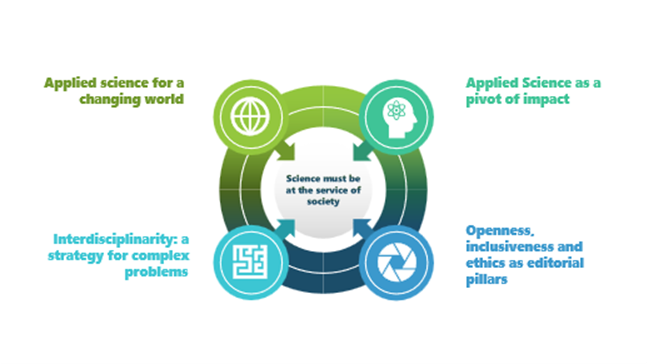
Figure 1. Editorial Foundations of Ceniiac
6. Conclusion: A Scientific Community with Purpose
This first volume of Ceniiac represents a beginning, but also a commitment—to build a plural, rigorous scientific community that is oriented toward the common good. It is much more than a collection of articles; it is the testimony of a commitment to meaningful science, open to debate, learning, and collaboration.
We invite educators, researchers, students, professionals, and decision-makers to be part of this community. Ceniiac aspires to be an open window to applied knowledge, critical thinking, and a shared commitment to the present and future of our societies.
Welcome to Ceniiac! Something important begins here.
Conflicts of Interest: The author declares no conflicts of interest.
References
Betancur Arias, J. D. (2022). Social sciences in the development of technological innovation processes. Revista Colombiana de Ciencias Sociales, 13(1). https://doi.org/10.21501/22161201.4227
Committee on Publication Ethics [COPE]. (2013). Ethical guidelines for peer reviewers (English). https://doi.org/10.24318/cope.2019.1.9
Espina-Romero, L. (2023a). Collaboration and interdisciplinarity in scientific research: fostering synergy to address current challenges. IPSA Sci Rev Científica Multidiscip, 8(2), 8–9. https://doi.org/10.25214/27114406.1627
Espina-Romero, L. (2023b). Post-pandemic scientific dissemination. Rev. Virtual Univ. Católica Del Norte, 68, 1–3. https://doi.org/10.35575/rvucn.n68a1
Ke, Q. (2020). Interdisciplinary research and technological impact: Evidence from biomedicine. ArXiv. http://arxiv.org/abs/2006.15383
Leung, S., & López-McKnigh, J. (2021). Knowledge Justice: Disrupting Library and Information Studies through Critical Race Theory (S. Y. Leung & J. R. López-McKnight (eds.)). The MIT Press. https://doi.org/10.7551/mitpress/11969.001.0001
Nowotny, H. (2021). In AI We Trust: Power, Illusion and Control of Predictive Algorithms. Wiley. https://www.wiley.com/en-br/In+AI+We+Trust%3A+Power%2C+Illusion+and+Control+of+Predictive+Algorithms-p-9781509548811
OECD. (2020). ADDRESSING SOCIETAL CHALLENGES USING TRANSDISCIPLINARY RESEARCH. https://www.oecd.org/content/dam/oecd/en/publications/reports/2020/06/addressing-societal-challenges-using-transdisciplinary-research_41211835/0ca0ca45-en.pdf
OEI. (2023). Science and Innovation: Social Processes for Sustainable Development. Organización de Estados Iberoamericanos (OEI). https://oei.int/
Disclaimer/Publisher’s Note: The statements, opinions, and data contained in all publications are solely those of the individual authors and contributors, and do not necessarily reflect those of Ceniiac Journal of Negocios Globales, its publisher, or the editors. Neither the journal, the publisher, nor the editors assume responsibility for any harm to people or property resulting from the use of any ideas, methods, instructions, or products mentioned in the content.